thought of the week: you are allowed to change the price

in the world we live in, there is this unspoken idea that we are supposed to be constantly dialed in.  right now, i am typing this from my macbook that is linked to my imessages with multiple windows open across my four gmail accounts.  when did this become the norm even during summer vacation?  anyone else in the same boat?


even with me being dialed in pretty regularly, something i have been working on is accessibility.  it is one thing to have all of these windows on my screen open – it is an entirely different thing to feel an immense pressure to respond to every text, phone call, email, dm, etc.  i am someone that has to be dialed in for work from august to may.  we have been instructed to keep our cell phones on our desks in plain sight so we can see the alert if the school goes on lockdown (what a world we live in).  this is in addition to me working in mental health and getting more texts than i could ever count about crises that need to be addressed immediately.  when i am at work, this does not bother me because i knew that this simply came along with the job.  but it is outside of work that started to chip away at me.


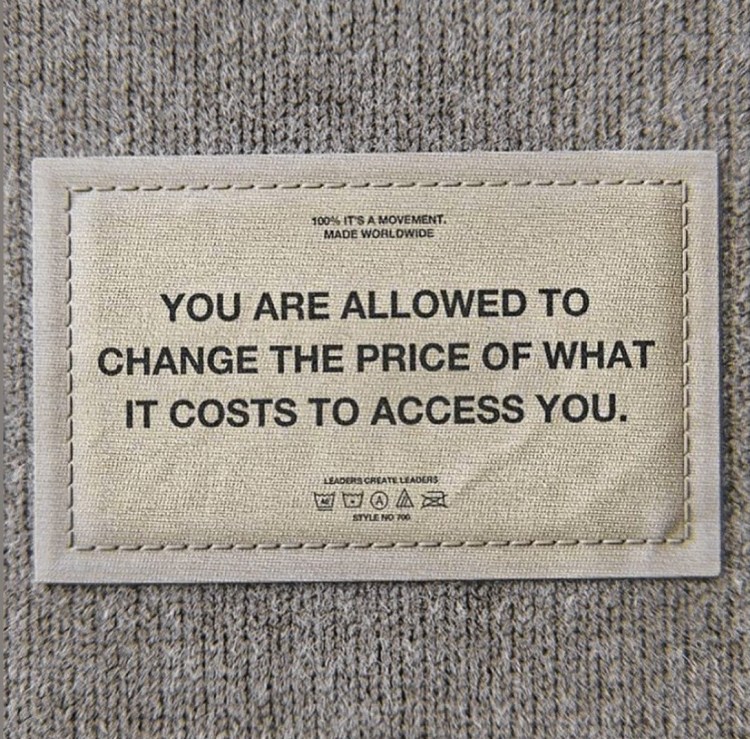
there did not seem to be boundaries around my accessibility.  it is like i had made this unconscious decision to be equally accessible for anyone at any given point in time, no matter the reason for contact or my mental/emotional state of being at that moment.  something had to give.  this quote summed it up perfectly.
 

07C95087-47CB-47D6-97CA-62CAC157EF9D


“you are allowed to change the price of what it costs to access you.”


i cannot tell you how much i needed to see this in print or how much it resonated with me.  there were people that had access to me that did not deserve it.  there were people who had access to me that was too easy considering the lack of reciprocity in our relationship.  there were people that accessed me with heavy content without first checking to see if i had the capacity to hold it.  but here’s the thing – i was, am and will be in complete control over who has access to me along with what it costs to access me.  while the cost may not be monetary, it certainly includes things like reciprocity, compassion and loyalty, amongst other things.


have you stopped to think about what it costs to access you?  do you need to change the price or is it fine as is?


xoxo,

k. tap
thought of the week: normalize asking children for consent

i don’t know if it is because so many of my clients are children, the new school year being only a month away, working through my own childhood trauma, being asked to be a godmother for the second time yesterday (which i am thrilled about) or a combination of the aforementioned, i have been gravitating towards writing about the little ones as of late.  last week, my thought of the week was: normalize apologizing to children.  it has gotten more traction on instagram than any post i have done the entire time i have had this blog.  there have been so many conversations following the post that have been thought provoking and tugged at my heartstrings.  i got messages from people saying that they truly felt seen – some for the very first time.


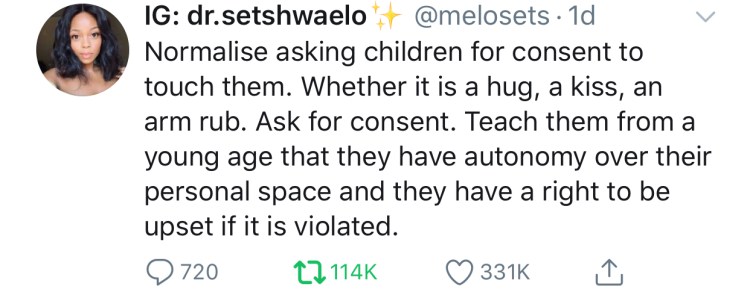
building on last week’s thought on things we should normalize with children, i saw this tweet from a doctor a few days ago that resonated with me – normalizing asking children for consent to touch them.


509010B1-5355-4312-A090-5A8981033B64_1_201_a


“normalize asking children for consent to touch them.  whether it is a hug, a kiss, an arm rub.  ask for consent.  teach them from a young age that they have autonomy over their personal space and they have a right to be upset if it is violated.” -dr. setshwaelo


because of the field that i am in, it is absolutely normal for me to ask children for consent to touch them.  if i have a client in distress and there is an incredibly emotional session, at the end of the session, i will ask: “would a hug be helpful or comforting to you in this moment?” – not only do i respect and honor whatever their decision is but my language makes it clear that the hug is about them and not about me.  however, when i think back to my own childhood or what i see with many of the children i work with in their own families, that is not the case.


i cannot count how many times as a child i was instructed to hug someone whether it be an extended relative or a friend of my mom or dad.  here’s the thing: not only is physical touch not one of my primary love languages, since i was a child, i have been someone that goes off of energy.  if i really loved someone, i would likely initiate a hug.  if i liked someone’s energy, i didn’t mind a hug.  if i did not like their energy, a hug was not something i wanted to engage it.  however, it did not always feel like a choice.


as i have gotten older and through education and practice, done a deeper dive into the field of psychology, i have thought a great deal about the impact of that along with the messages being sent to children early on about consent.  a child does not owe someone a hug or any other kind of physical touch as a greeting.  it does not matter if they are interacting family, friends of the family or an elder.  this still applies even if the adult in their life values physical touch as their love language of choice.  if the child does not, it is wrong to force them to do so.  if we are teaching children to advocate for themselves as they grow up, shouldn’t that start early on and at home?  and if it is in fact starting at home, that means that parents should back their children up if they express not wanting to be touched by someone even if it is someone the parents trust.


i am incredibly interested in thoughts on this along with experiences you’d like to share on the topic.  write below or feel free to privately message me depending on the nature of your response.


xoxo,

k. tap

thought of the week: normalize apologizing to children

i knew early on that i did not want to work with kids once fully settled into my career.  this is for a variety of reasons but one of the main ones being this: children do not have the ability to change their environment the way that adults do.  so if a child comes into my office and tells me about a tough time at home, an action plan cannot be carried out the same way that it could be if they were an adult.  instead, there are tools on communication, stress management and how to process feelings provided to them.  there is also a great deal of learning how to move forward without apologies that they definitely deserve.  the second reason i won’t be able to work with kids long term is that i tend to take the heavy hitting cases home with me – i cannot just leave the trauma a child presents during our 50 minutes in my office once i go home for the day.  and while i do not have kids now, i know that once i do have my own little ones, i will not have the emotional bandwidth needed for both home and work.  i am aware of my limits and want my clients, my children and me to all get the best version of myself.


quarantine meant that all of my sessions moved to virtual ones.  while i was grateful to still be employed, i hated the screen time for several reasons.  my eyes and head would often hurt after longer days, my home no longer felt like the sanctuary i had worked so hard to create, there was not the same sense of connection as when i would meet with my kids in person and i was slapped in the face by what some of their home environments were really like.  and while i have talked about apologies at length on my blog – from the apologies i owe myself to what my apology language is, a topic we have not covered that deserves some attention is children + apologies.  this quote jumped out at me recently.


6153D055-CEE4-4CD7-BAB3-D29FD0F90625


“normalize apologizing to children.” -jacarlvs


apologizing to children – what a fucking concept.


i grew up in a household with one parent who did not apologize to me for anything that was ever done until i was in my 20s and another parent who typically did not do a lot that would require an apology in the first place.  even still, it seemed like there were far more apologies expected from my brother and i than the other way around.  it was almost like because we were kids, we were not respected enough to be owed an apology, even if there was a major fuck up.  i now see this happen time and time again with my clients.  their parents can put them through the ringer and often, there is little to no acknowledgment or accountability.  an apology?  almost never.  that needs to change.


children are people, too.  they deserve respect and they certainly deserve apologies when the adults in their life drop the ball.  i looked a parent square in the eye this year and reminded them that their child did not ask to be here.  they were totally floored.


when mishaps the adults in a child’s life do are not acknowledged, that same child becomes an adult with an extensive amount of issues and anxiety rooted in said childhood trauma.  many of us, myself included, have had to sit across from a therapist to work through that childhood trauma.  i noticed that my unaddressed trauma was coming up in other areas of my life, especially my relationships.  that was not fair to me or my partner.  both apologies and actions to match from the adults in my life would have changed that trajectory.


so whether you have kids, work with kids or are the aunt, uncle or godparent to a kid, normalize apologizing to them.  it does not make you smaller, it makes you human.  plus, it shows them from an early age what a healthy relationship looks like along with expectations they should have of the people in their orbit.  i want all of the kids around me to value accountability and know that no one in their life is above an apology.


were you apologized to as a kid?  if not, how has that impacted you as an adult?


xoxo,

k. tap

thought of the week: making others uncomfortable is okay

2020 has been filled with more difficult and complex conversations than at least the first 25 years of my time spent on earth combined.  whether it was about setting boundaries that felt good for me, talking about my experiences as a black woman in trump’s america or advocating for myself in the workplace, there have definitely been some ruffled feathers.


so you are probably wondering what the common thread was in the aforementioned instances? turning 30 has come with a lot of changes including a new level of self awareness.  i not only know who i am, i am comfortable with who i am and am loving myself unconditionally in the same way that i do each member of my inner circle.  sometimes, that is received well and other times, it is met with disdain, combativeness, confusion, and sometimes, even hate.


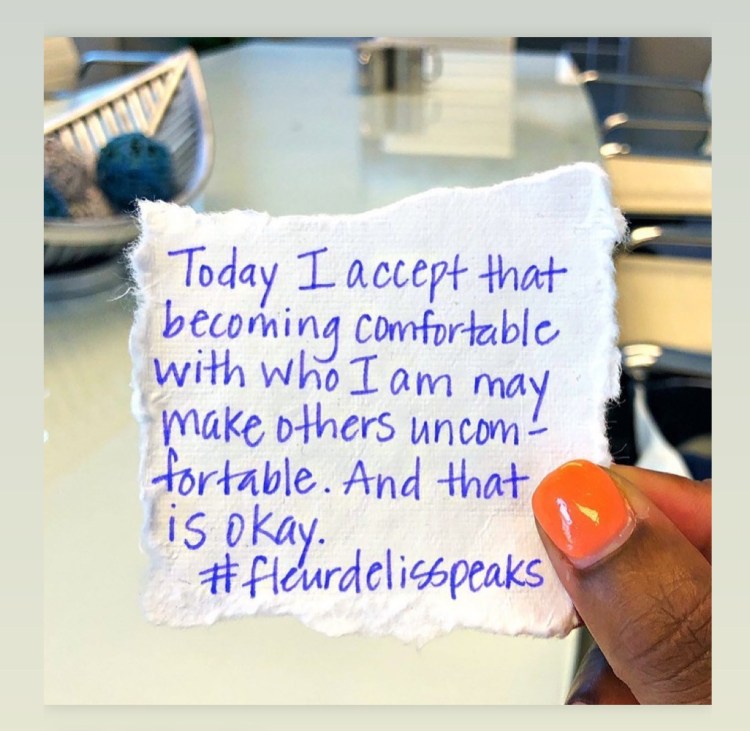
when i saw this quote, it really resonated with me:


A9A5E05A-CC05-4073-BBCC-C1AC7B4CFF50


“today i accept that becoming comfortable with who i am may make others uncomfortable.  and that is okay.” -faith broussard cade


i am no longer in a space in my life where the comfort of others is a priority of mine.  what would it feel like to let go of the weight of the comfort of others that you might be carrying (even if it is subconsciously)?


xoxo,

k. tap

thought of the week: company versus connection

as things have started to move in different phases during covid, i have started seeing some people in ways that feel safe for each party involved to do so. even still, after seeing virtually no one for months in the flesh, i was able to reflect a great deal on the idea of loneliness.

so often, when loneliness is discussed, it is centered around being physically alone. this can be true in some ways. with me living alone, i went over two months without so much as hugging a single person due to quarantine. even with physical touch not being one of my primary love languages, i missed that piece of connectivity.

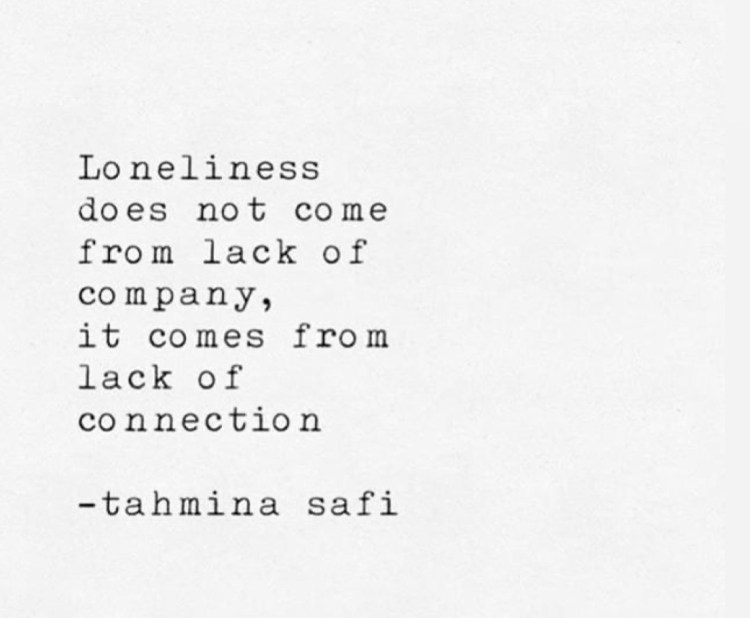
but here’s the thing: i have talked to countless people from clients to coworkers to friends who spoke at length about loneliness over the last few months even if they live with their partners, roommates, friends or family. it really made me take a step back and reframe how so many of us are taught about loneliness. i thought this quote summed it up perfectly…

“loneliness does not come from lack of company, it comes from lack of connection” -tahmina safi

i have come to realize that i have been able to go through more of the last few months than not without feeling lonely. this is because i am at a space in my life where every single person i am in contact with outside of work is someone i feel connected to on a level that goes far beyond the surface – so much so that even without physically being able to see them, i still felt aligned, valued and loved.

if you have been experiencing loneliness, it is worth asking yourself if you have blamed company or if you need to consider the connectivity.

i am absolutely open to hearing your thoughts on this below or if you want to contact me privately, feel free to shoot me a dm on instagram.

xoxo,

k. tap